

How Ageing Infrastructure is Impacting the Future of the Power Sector
Electricity is delivered by licensed private companies under Ofgem’s regulation. Produced from multiple generation sources, electricity then moves across high-voltage transmission networks before being stepped down and delivered through regional distribution networks to homes, businesses and critical infrastructure. These networks are fundamental to every aspect of daily life, but many parts of the system are now under increasing pressure from changing demand patterns, ageing assets and rapid electrification.
Against this backdrop, the power sector has become an increasingly important part of Deecon’s portfolio, supporting both network operators and their supply chains. The scale of activity required over the coming years to support electrification, renewable integration and network reinforcement is expected to accelerate significantly across the sector.
To meet future demand, grid capacity must grow significantly by 2050. National Grid’s business plan for 2026–2031 includes major investment in both maintaining existing infrastructure and expanding network capacity. This is a substantial undertaking, involving thousands of kilometres of new overhead lines and circuits to support growing demand and improve energy security.
The Power Landscape
Four key groups are responsible for the transmission and distribution of energy in the UK:
National Energy System Operator (NESO)
NESO is the independent public body responsible for the strategic planning and operation of Great Britain’s electricity and gas transmission systems. Its role includes balancing supply and demand across the network and providing strategic direction for future system development.
This role was previously undertaken within National Grid before transferring to public ownership in October 2024, while remaining operationally independent from government.
Transmission Owners (TOs)
Transmission Owners own, maintain and invest in the high-voltage electricity network that transports power over long distances from major generation sources to grid supply points.
In Great Britain, transmission assets are owned and maintained by National Grid Electricity Transmission in England and Wales, SP Energy Networks in central and southern Scotland, and Scottish Hydro Electric Transmission in northern Scotland.
Distribution Network Operators (DNOs)
Six DNO groups operate across 14 licensed regional areas in Great Britain, delivering electricity from the transmission system to homes, businesses and local infrastructure. DNOs are responsible for maintaining local networks and delivering the upgrades required to support increasing demand and new connections.
Regulator
Ofgem regulates network operators across the power sector. Its role includes setting policy, approving investment frameworks and protecting consumers while ensuring networks can support future energy demand. Investment and performance expectations are managed through RIIO regulatory frameworks (Revenue = Incentives + Innovation + Outputs).
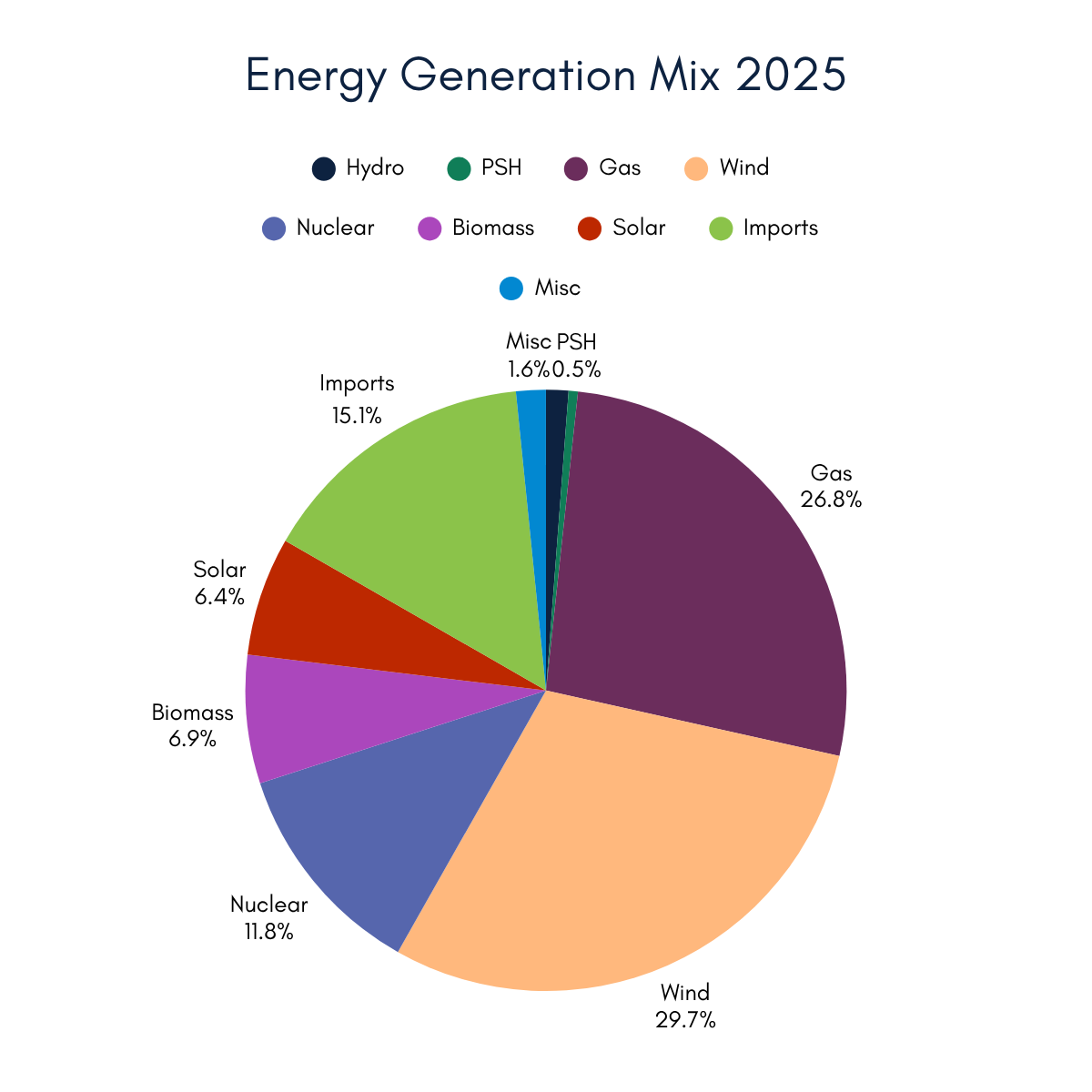
The UK energy landscape is continuing to shift away from fossil fuels towards renewable and low-carbon generation. Renewables accounted for approximately 63% of total UK power generation in 2025, compared with 14.1% in 2015 [1].
Unprecedented Demand vs Ageing Infrastructure
Many of the current challenges facing the power sector stem from a network originally designed for predictable, centralised demand patterns, that is now adapting to decentralised generation and rapid electrification.
Pressure on existing infrastructure is increasing while networks are being asked to support significantly different operating conditions. Many core assets were designed for one-way power flows and are now required to accommodate increasingly dynamic and bidirectional demand profiles. Alongside this, historic upgrades and maintenance programmes were often delivered incrementally over long periods, creating inconsistencies in asset condition, network capability and operational flexibility.
The privatisation of utilities in the late 1980s aimed to drive operational efficiency and attract long-term private investment into UK infrastructure. However, the scale of investment now required to modernise and expand the electricity network is placing increasing pressure on both operators and consumers. Ofgem estimates that investment in grid expansion alone could increase annual household energy bills by around £50 by 2031 [2].
These infrastructure pressures are now being accelerated by unprecedented demand growth across the sector. Three of the primary drivers are:
Electric Vehicles (EVs)
The UK government plans to phase out the sale of new petrol and diesel cars by 2030, accelerating EV adoption across both domestic and commercial markets. In 2025, EV and hybrid vehicle sales represented almost half of all new car sales in the UK [3].
Electrification of Heat
The transition away from gas boilers towards electric heat pumps is expected to significantly increase electricity demand. The Department for Energy Security and Net Zero aims to increase annual heat pump installations from approximately 40,000 in 2023 to 600,000 by 2028 [4].
Data Centres, AI and the Digital Economy
Data centres are becoming increasingly critical to the UK economy and were formally designated as part of the UK’s Critical National Infrastructure in 2024. Ofgem has reported that proposed data centre connections now exceed current GB peak demand capacity, with projections suggesting they could account for ~9% of total UK electricity consumption within the decade [5].
Much of this growth is linked to the UK government’s commitment to achieving net zero by 2050. As electrification accelerates, the immediate challenge becomes physical and operational: connecting new generation sources and demand quickly enough, within existing network constraints.
Meeting this challenge will require accelerated grid capacity reinforcement programmes across both transmission and distribution networks. These will, in turn, create delivery, resource and supply chain pressures. At the same time, increasing regulatory scrutiny and requirements for cost justification are placing greater emphasis on efficient delivery and demonstrable value for money.
The Way Forward
Recent regulatory reforms have placed greater focus on accountability, delivery performance and value for money across the power sector. Through the RIIO framework, Ofgem is seeking to balance the need for significant infrastructure investment with increased expectations around efficiency, transparency and consumer protection.
Delivering the government's target of net zero by 2050 will require the power sector to move at a pace and scale not previously seen. Transmission owners and distribution network operators must accelerate the reinforcement and modernisation of networks for today's demands. Ofgem, in turn, must continue to evolve regulatory frameworks to enable this investment without placing disproportionate cost on consumers. The challenge is not simply building more infrastructure, it is doing so efficiently, transparently and at a rate that can keep step with electrification.
Deecon has extensive experience supporting clients to strengthen business cases, optimise delivery strategies and demonstrate value for money through robust governance, disciplined cost control and transparent decision-making. As a consultancy invested in the long-term health of the energy sector, Deecon are driven by an understanding that efficient, well-governed delivery is central to ensuring that the scale of investment required translates into real value for clients and consumers.
Written by Austin Mills
Edited by Kate Randall